
Men's Blazer Jackets
Our men’s blazer jackets blend sharp tailoring with modern versatility. Perfect for meetings, evenings out, or elevated casual looks, they adapt to countless settings with ease. Crisp cuts and thoughtful detailing add polish to every outfit. Highlighting meticulous detailing and heirloom-level quality, each blazer jacket is more than a layer—it’s a wardrobe cornerstone built to impress.
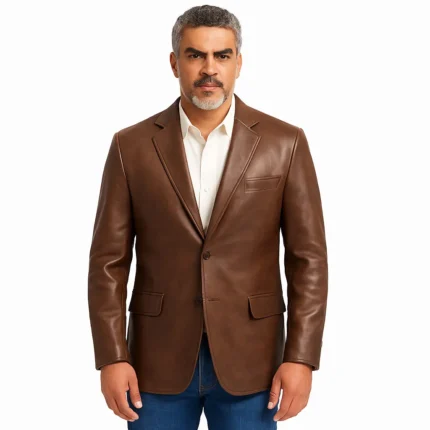
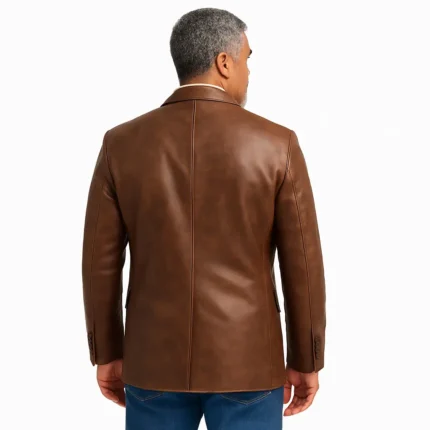
Men’s Brown Genuine Sheepskin Leather Blazer Jacket
Original price was: $239.99.$189.99Current price is: $189.99.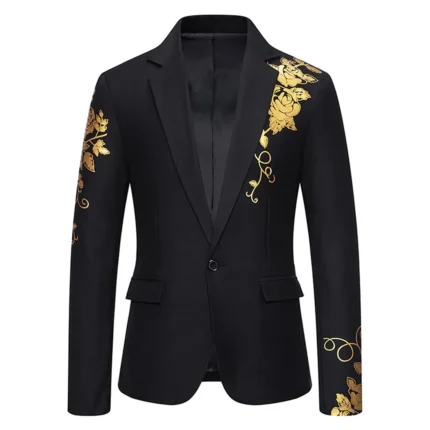
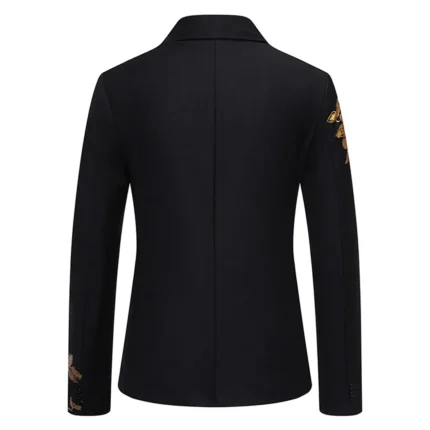
Men’s Slim Fit Floral Embroidered Blazer Jacket
Original price was: $209.99.$149.99Current price is: $149.99.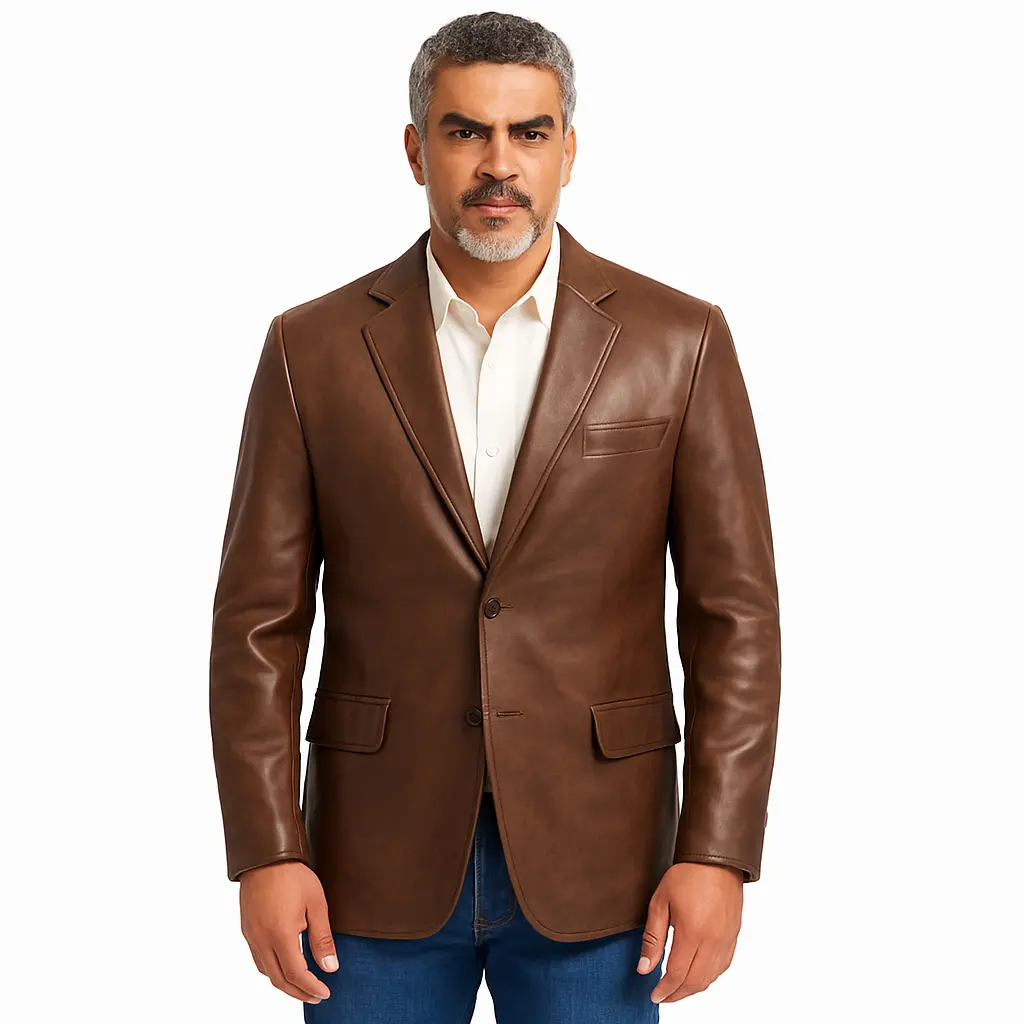
From Tailors’ Blocks to Office & Street — A Short History
The blazer evolved from naval and sporting uniforms into a universal signifier of composure: originally a practical, single-breasted jacket cut for movement, it became shorthand for membership, then a staple of modern menswear. Over decades, the shape softened and diversified — fuller shoulders for formalwear, deconstructed constructions for casual takes, and hybrid blends that borrow from outerwear. That heritage explains why blazers read as both purposeful and adaptable: they carry tailoring DNA but tolerate a broad range of fabrics and finishes, which is why they remain one of the most useful pieces someone can own.
Fit Signals — Unlocking the Perfect Silhouette
Fit is what separates a blazer from a regular jacket. Use these practical checks to make sure the proportions work on your body.
- Shoulders: The seam should land at the natural shoulder edge. If it hangs off or digs in, the proportions are wrong.
- Chest & Buttoning: When buttoned (single button for one-button styles, top button for two-button), the fabric should lie flat without pulling. Small horizontal tension lines mean size up.
- Sleeve length: Aim for a clean cuff show — roughly 1–1.5 cm of shirt cuff visible beyond the blazer sleeve at rest.
- Back & Movement: Raise your arms in a reaching motion. The back should allow movement without the hem riding up more than an inch.
- Length: Blazer hem typically hits just past the waist. Longer sport coats can extend to mid-hip. Choose length by your torso proportions and the look you want (shorter = modern, longer = traditional).
- Lapels & Proportion: Wider lapels suit broader bodies and classic looks, while narrow lapels read more modern. Match the lapel width to your tie width if you plan to wear them together.
Fabric & Structure — A Comparison Table
Selecting the right fabric changes what a blazer does for you. Below is a quick reference to match materials to climate, formality, and care.
| Fabric Type | Formality | Best Use |
|---|---|---|
| Wool (Tropical / Super 110–130) | High–Medium | Office, presentations, client meetings |
| Wool-Blend (wool + synthetics) | Medium | Daily office wear, travel-friendly suiting |
| Cotton Twill / Drill | Medium | Smart-casual, weekend tailoring |
| Linen / Linen-Blend | Low–Medium | Summer events, travel, relaxed tailoring |
| Corduroy / Velvet (short pile) | Low–Medium | Casual evenings, seasonal styling |
| Unstructured Knit / Jersey Blazer | Low | Travel, creative workplaces, layering |
| Tweed / Herringbone | Medium–High | Country style, smart-casual, heritage looks |
Smart advice: for frequent travel, a wool-blend with anti-wrinkle finishing gives tailored looks with less care and fuss. For weekend versatility, a cotton blazer behaves smart but breathes and washes more easily.
Versatility Playbook — Five Ways to Wear a Blazer
- Meeting-Ready: Structured wool blazer + crisp shirt + dark chinos. Approachable but authoritative.
- Smart Casual Weekend: Unstructured cotton blazer + white tee + selvedge jeans + clean sneakers. Effortless polish without stiffness.
- Evening Minimal: Velvet or corduroy blazer + black rollneck + slim trousers + leather boots. Texture replaces tie, perfect for dates.
- Airplane to Pitch: Knit blazer over a merino polo + travel trousers. Wrinkle-resistant comfort that still looks considered.
- Layered Office: Wool blazer over a fine-gauge sweater + shirt collar peeking. Warmth without bulk and easy transitions indoors/outdoors.
Styling rule: balance structure—if the blazer is soft, keep the rest tailored; if the blazer is stiff, relax one other element (e.g., swap dress shoes for sneakers) for modern ease.